💡 In one sentence
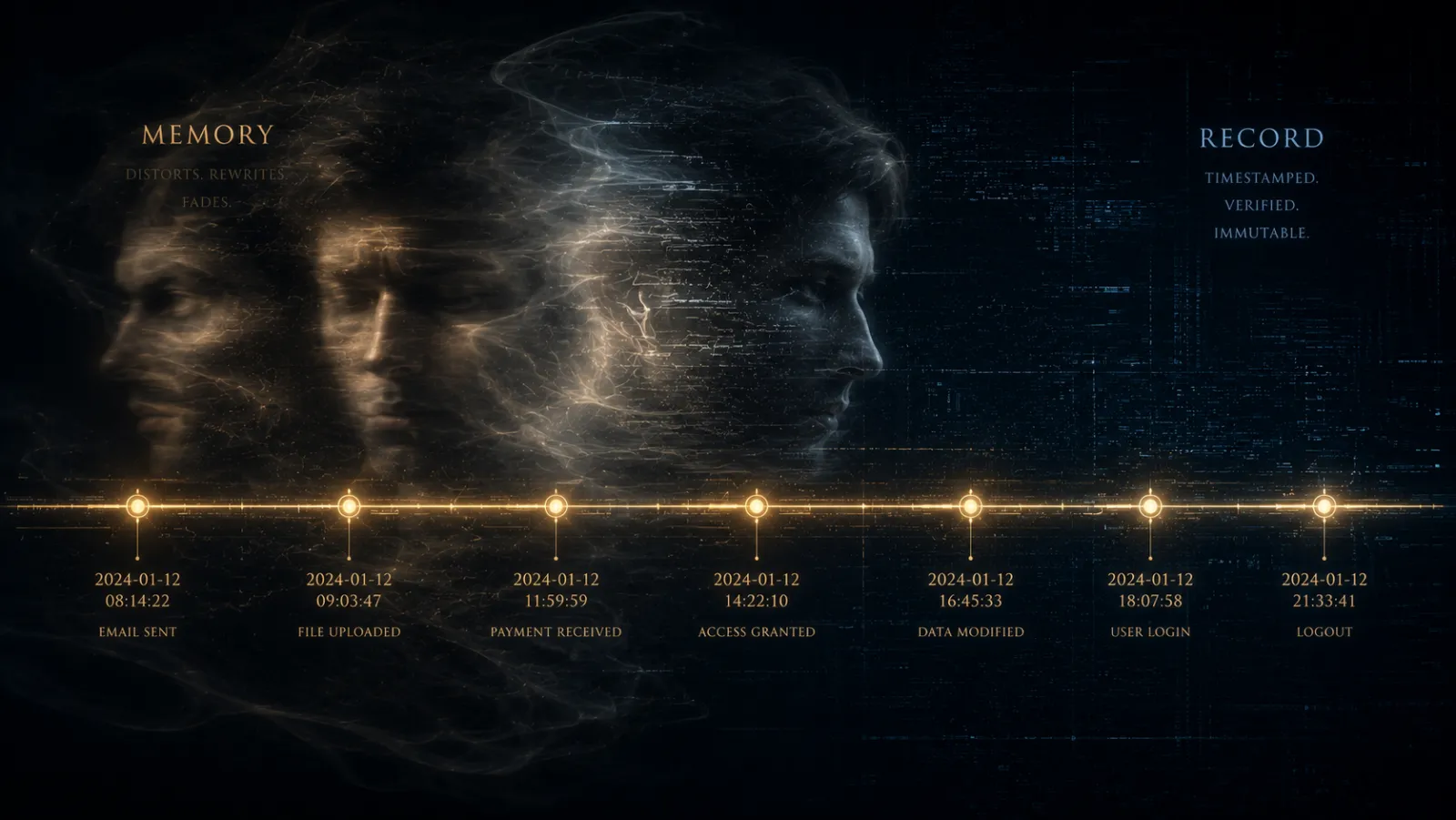
"I actually knew it would go like this" is the number-one killer of trade review. Once the move is over, your brain quietly rewrites the call you made at the time. The only antidote is to leave tamper-proof evidence in the moment.
In "Seeing Through Hindsight Line-Drawing" we noted that one of the three drivers behind the brain's love of drawing lines is memory polishing. This article is dedicated to beating it.
1. Why "memory-based review" is almost always fake
Review happens after the fact, and by then you already know the outcome. That contaminates memory in subtle ways:
- Hindsight bias: once you know the outcome, you overestimate how much you actually "foresaw" at the time.
- Selective recall: you remember the few times you called it right and automatically fade out the wrong calls, the hesitation, and the exceptions.
- Reverse-engineered logic: the brain hates "I just hadn't thought it through," so it backfills a seemingly airtight rationale that covers up the genuine mess at the time.
The result: a memory-based review reviews not the real you of that moment, but a polished, nonexistent expert. The "lessons" you draw against that illusion naturally fail to reproduce in the future.
2. Decision-point journaling: 3 sentences + one timestamp
The core action is dead simple. At the moment you make or consider a trading decision, write three sentences:
Then do the one thing that makes it impossible to tamper with after the fact: add a timestamp — post it to a private, single-member Telegram channel / a notes app / even your phone's memo, or save a screenshot of the chart alongside it. The timestamp is the soul of this whole method: it turns "I knew it at the time" from a freely editable memory into a piece of hard evidence.
3. How to use it at review time: four honest questions
Once you've built up a batch of timestamped records, pull them out regularly (say, weekly), compare them against what actually happened, and answer each one honestly:
- 1. Was the call right? (At the outcome level.)
- 2. For the right calls, was it a lucky guess or did the rule actually work? (Lucky guesses don't belong in your experience bank.)
- 3. For the wrong calls, how should the rule change? (Mistakes are the fuel for iteration.)
- 4. Where did I not actually understand it and was just telling a story? (Catch your self-deception from the time.)
The core is that one line: pit your flawed, incomplete self of the moment against your hindsight-omniscient present self. You're not allowed to edit the original logic — you must admit "at the time I simply didn't see it."
4. A copy-paste review template
[Decision record #] Timestamp: 2026-06-08 14:30 (UTC+8)
Instrument / timeframe: ETHUSDT / 4H
1. Observation: _________________________________
2. Call: ________________________________________
3. Invalidation condition: ______________________
4. Actual action: enter / skip / size ___

—— Fill in below at review time ——
5. Actual outcome: ______________________________
6. Right/wrong? Lucky guess or working rule? _____
7. How should the rule change? __________________
8. Where was I telling a story at the time? ______
Turn this into a quick template in your notes app — fill in the top half at each decision, the bottom half at each weekly review. Stick with it for a month and your sense of your real skill level will be completely overhauled — usually downward, but that is precisely where progress begins.
5. When the recording is done automatically by a system
The biggest problem with manual journaling isn't that people don't know how — it's that they can't sustain it: too busy, too tired, don't want to log a loss, can't be bothered. The moment the record has gaps, review falls back to "going by memory." This is a hidden benefit of handing execution to a system — a system leaves a trail by nature, and it can't be polished.
CoinTech2u (the AI dynamic multi-strategy trading system) shares the same spirit as decision-point journaling on exactly this point:
Every decision is logged automatically
Opens, scale-ins/outs, take-profits and stops all have objective, timestamped records — independent of whether you "remember," and impossible to dress up after the fact.
Results can be independently checked
/live-proof reads the official system API directly every hour — it's a "decision-point record" you don't have to maintain by hand, yet stays honest all the same.
Willing to show losses and drawdowns
A genuine record doesn't cherry-pick trades. This is exactly the "live ≠ backtest, unrealized losses must be disclosed" requirement in the review methodology.
You can keep journaling by hand yourself (highly recommended — it's good for both your feel for the market and your mindset); or you can let the system carry "a record that can't be polished" all the way through for you.
See what a record that can't be polished looks like
Three sentences and one timestamp — the bar couldn't be lower, yet it plugs the single biggest leak of memory polishing. Start with your very next decision today.
📚 Further reading (this series)
Understanding the theory is the easy part
Even a sound method falls apart when you execute it by hand — hesitation, moved stops, revenge trades. CoinTech2u's AI multi-strategy system runs the rules for you, without the emotion.
Create a free account